






You must have heard of “lemon candy” – the kind that melts slowly in your mouth and leaves you feeling fresh for hours. In 2015, a similar tangy candy entered the Indian market. It didn’t make a flashy entry. There were no huge billboards, no big-budget advertisements. It arrived quietly, but its flavor caused a sensation.
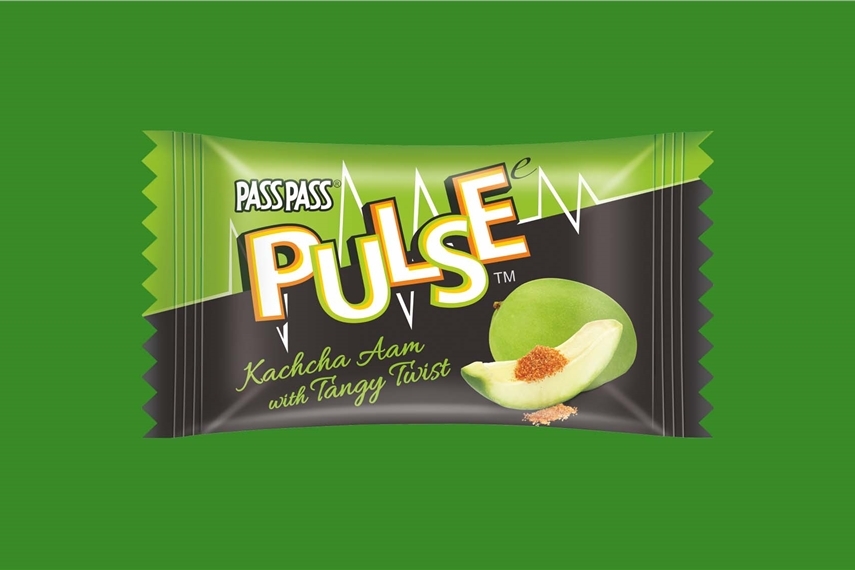
In a market filled with sweet chocolates, candies, and toffees, this salty treat stood out and won people over. While global brands were busy selling expensive dark chocolates and coffee-flavored variants, this ₹1 candy rooted itself so deeply that it earned ₹750 crore within just a few years.
We’re talking about Pulse Candy, known for its raw mango flavor that became an instant favorite. Its taste was so unique that instead of buying one or two pieces, people started purchasing entire boxes. Within just eight months of its launch, Pulse crossed ₹100 crore in revenue — all without a single advertisement. According to a report in The Economic Times, Pulse matched the record of Coca-Cola’s Coke Zero in terms of initial market impact.
In 2015, no one had heard of this candy, and yet, through sheer word-of-mouth and its one-of-a-kind taste, it managed to outshine well-established players in the market. Pulse Candy is manufactured by the DS Group (Dharampal Satyapal Group), headquartered in Noida.
They launched Pulse for just ₹1, and through its flavor and grassroots marketing, it became a major brand in just nine years. According to DS Group Vice-Chairman Rajiv Kumar, the brand is projected to cross ₹1,000 crore in sales within two years. In FY 2025 alone, Pulse recorded ₹750 crore in revenue.
Rajiv Kumar had only one instruction for his team:
“Make such a candy that when someone eats it, their eyes should close in delight. If not, then it’s not worth it.”
Pulse gave tough competition to established names like Alpenliebe and Parle’s Mango Bite — brands that had ruled the candy market for a decade. Its entry created a stir in India’s ₹6,600 crore candy industry. Currently, Italian company Perfetti Van Melle dominates this market with brands like Alpenliebe, Chlor-Mint, Mentos, and Happydent, commanding ₹2,000 crore in annual sales.
While 90% of Indian candy brands fail within their first year, Pulse achieved ₹100 crore in just 8 months, and ₹300 crore in its second year. DS Group had been researching and developing this candy since 2013, conducting extensive market surveys before its 2015 launch.
Interestingly, DS Group is a major pan masala company in India. To appeal to a diverse audience across North and South India, they launched Pulse in various tangy flavors. The product succeeded because of its low price, good retailer margins, and DS Group’s vast distribution network.
Within one year, Pulse was being sold in 8.5 lakh retail outlets across the country through 255 distributors. From local pan shops to large retail stores and malls — Pulse was everywhere. Its success even reached global markets like UAE, UK, and Singapore.
Thanks to a strong marketing strategy, Pulse became India’s fastest-selling candy. The team’s deep research revealed that raw mango flavors made up 50% of India’s candy market share. They also observed that people enjoy raw mango with salt — and that became the foundation of Pulse. DS Group specifically targeted India’s ₹4,000 crore hard-boiled candy segment — candies that melt slowly in your mouth.
After its roaring success, the company began working on launching new variants of Pulse Candy.
From a humble ₹1 tangy candy to becoming a ₹750 crore giant — Pulse didn’t just enter the candy market. It redefined it.